Leonardo Gamba | ガンバ・レオナルド
Translating neuroscience into a product people can actually use
Syneurgy had working AI and a compelling scientific model. What it didn’t have yet was a product. I led design to close that gap, from raw data endpoints to a deployable B2B platform for teams and their leaders

Company: Syneurgy
Role: Lead Product Designer.
My scope: Product Research, User Journey Mapping, Information Architecture, UX/UI Design, Prototyping, Design System, Development Collaboration, Stakeholder Management
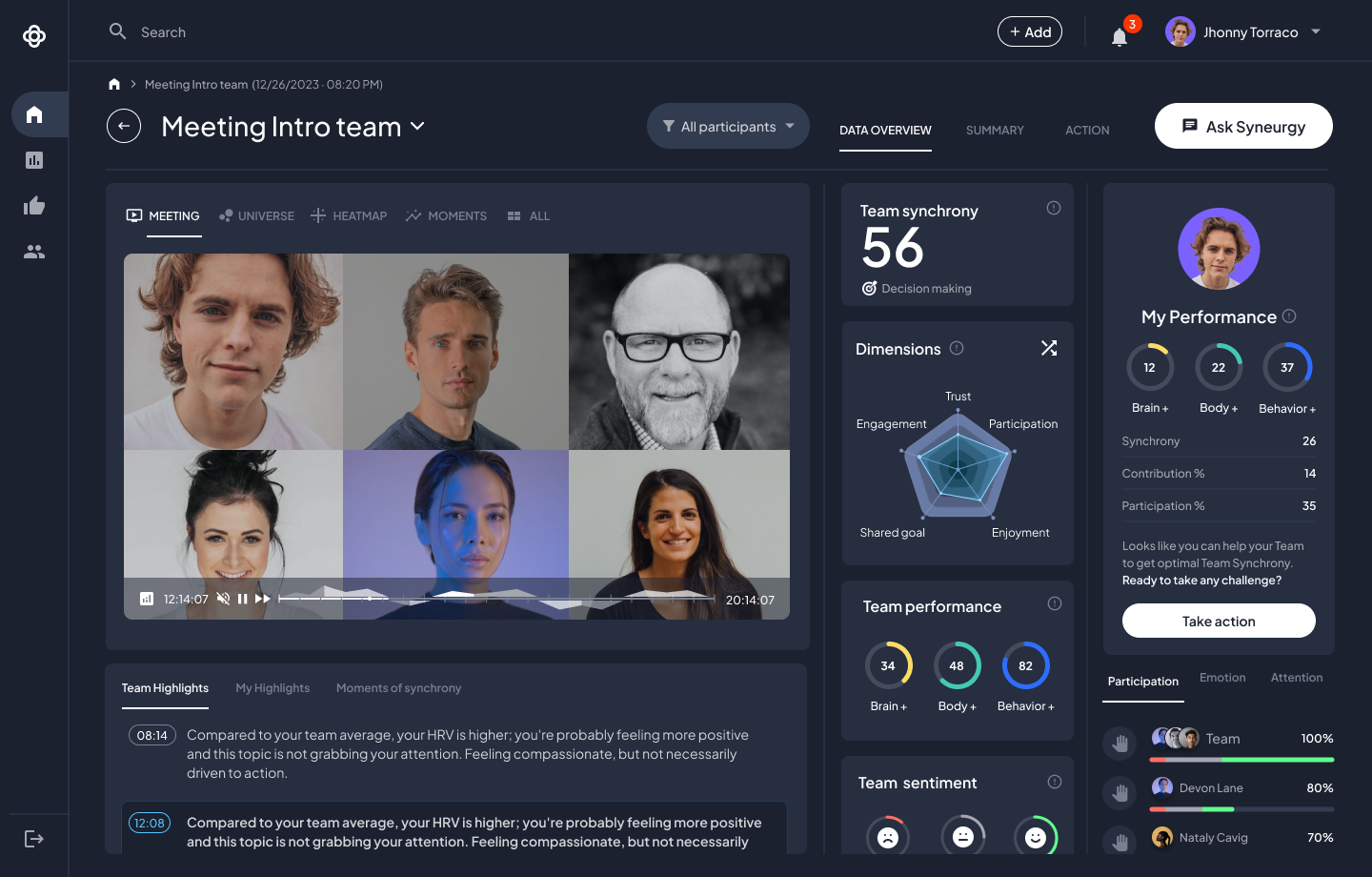
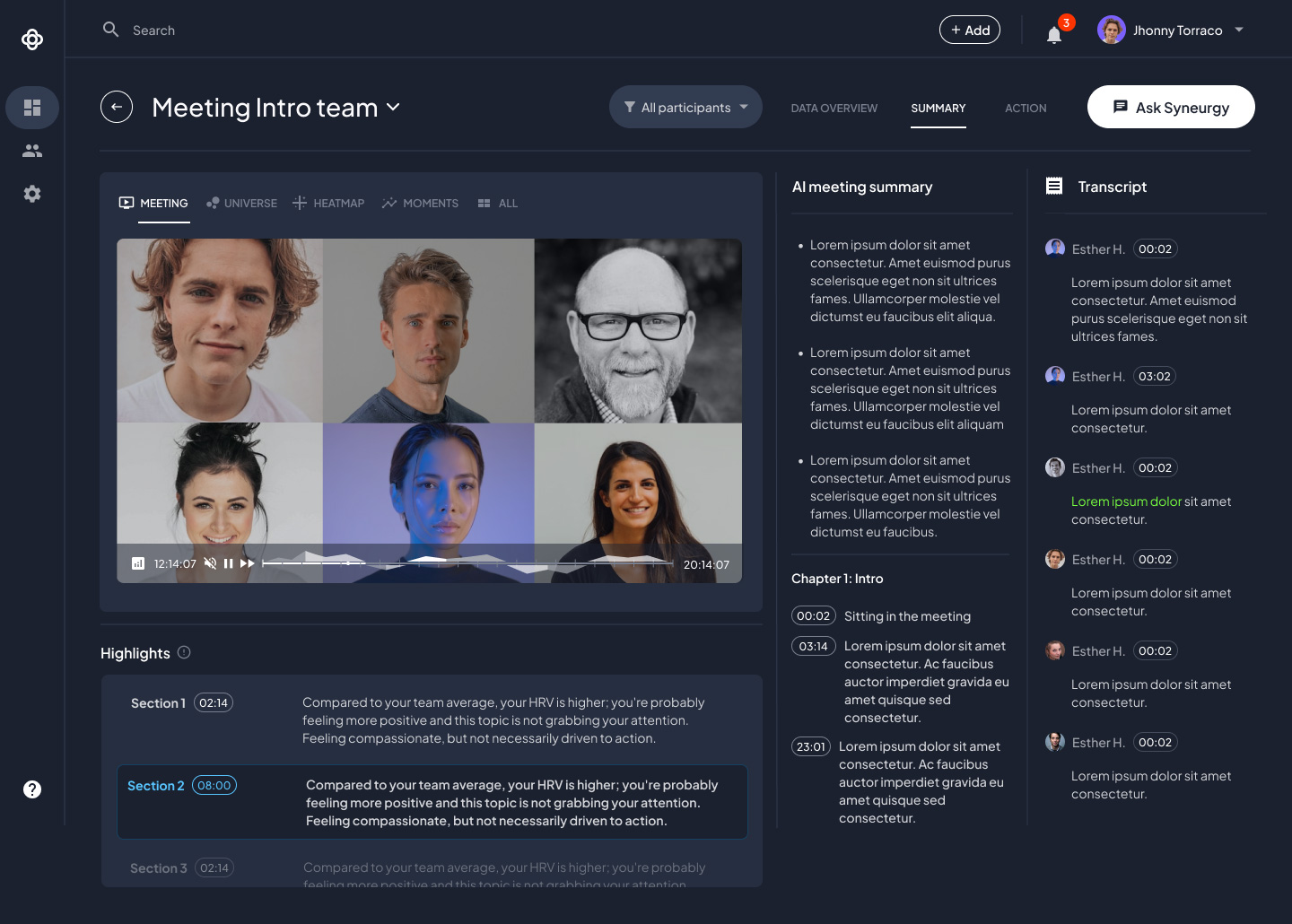
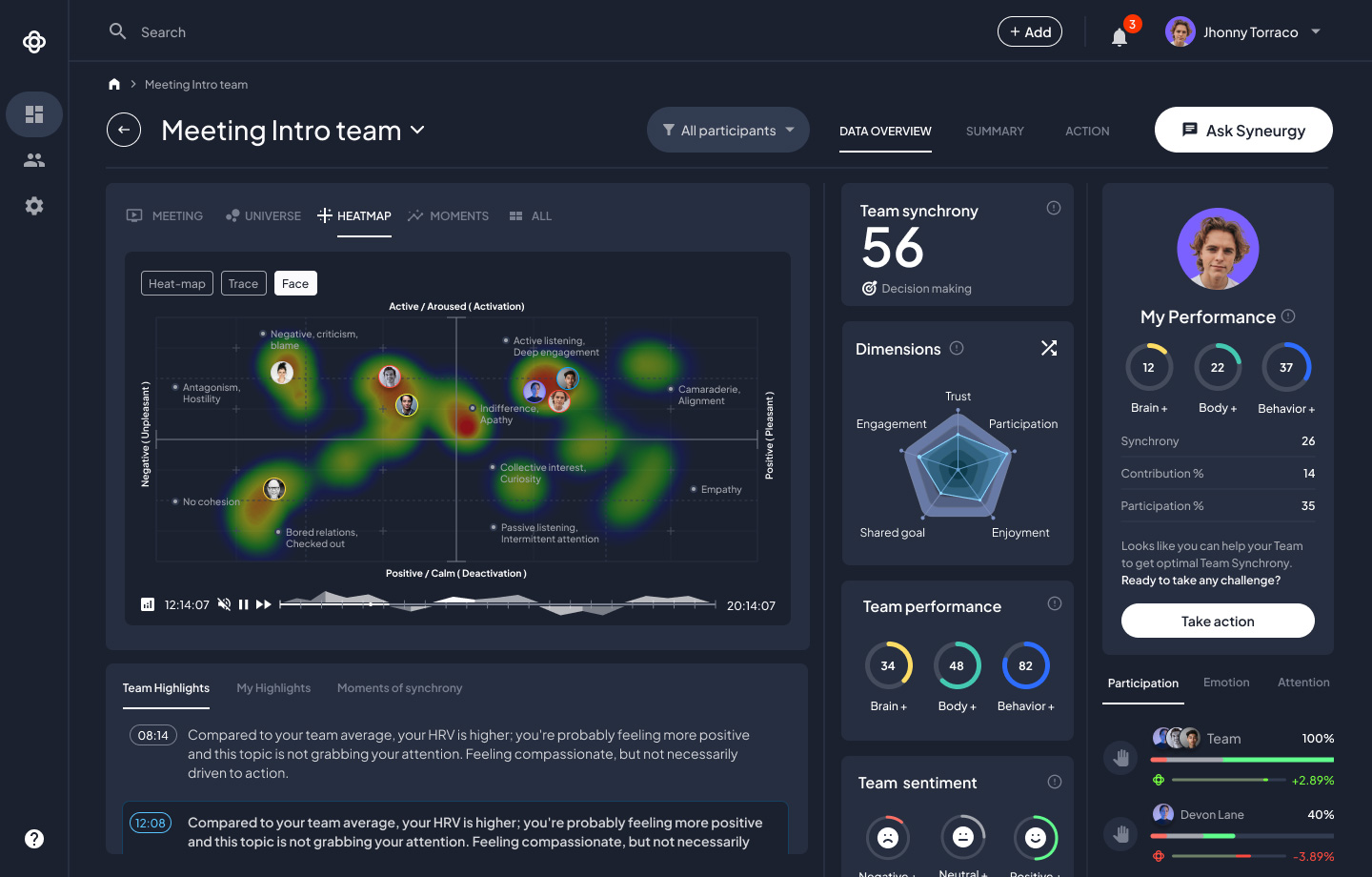
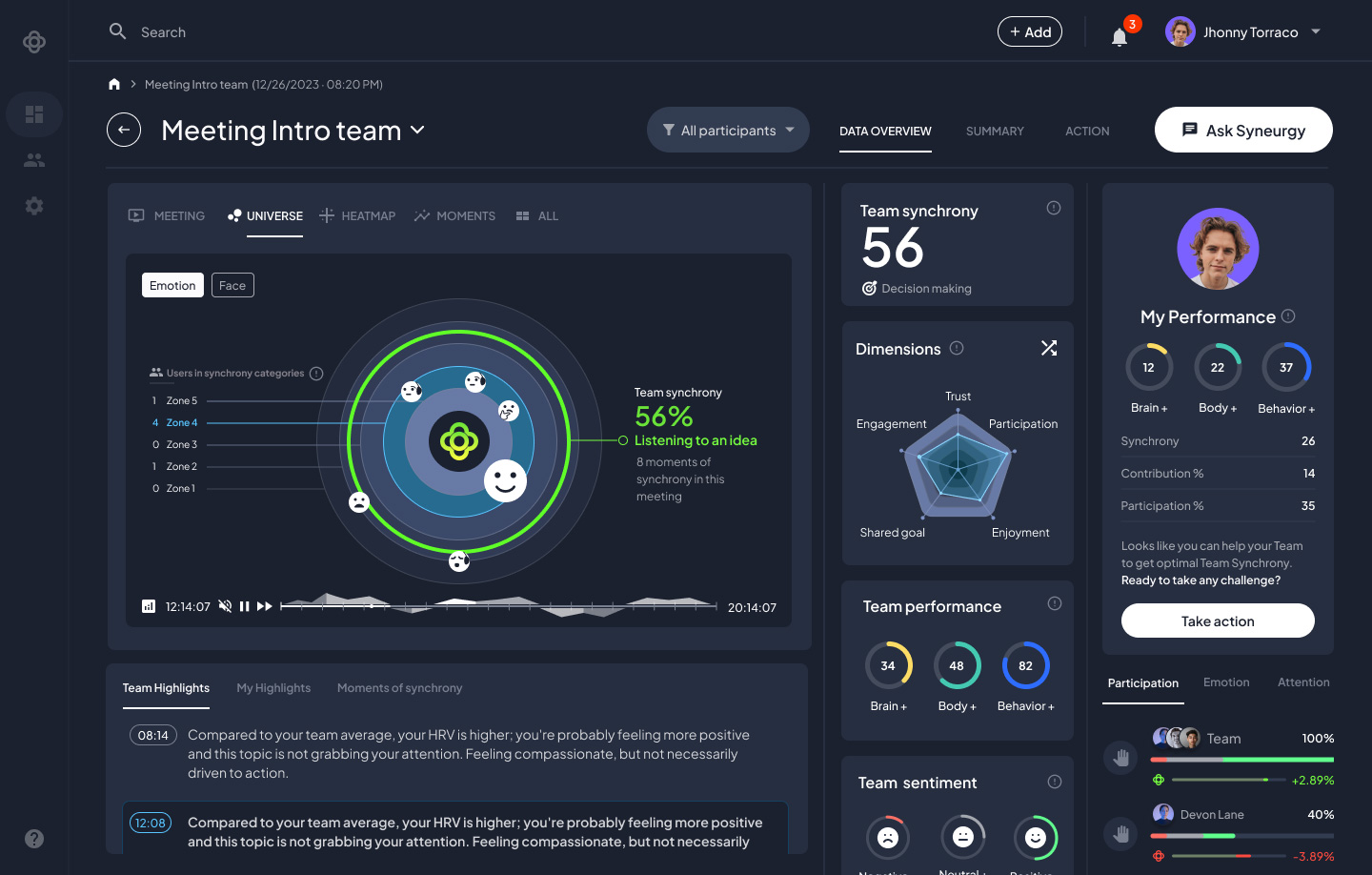
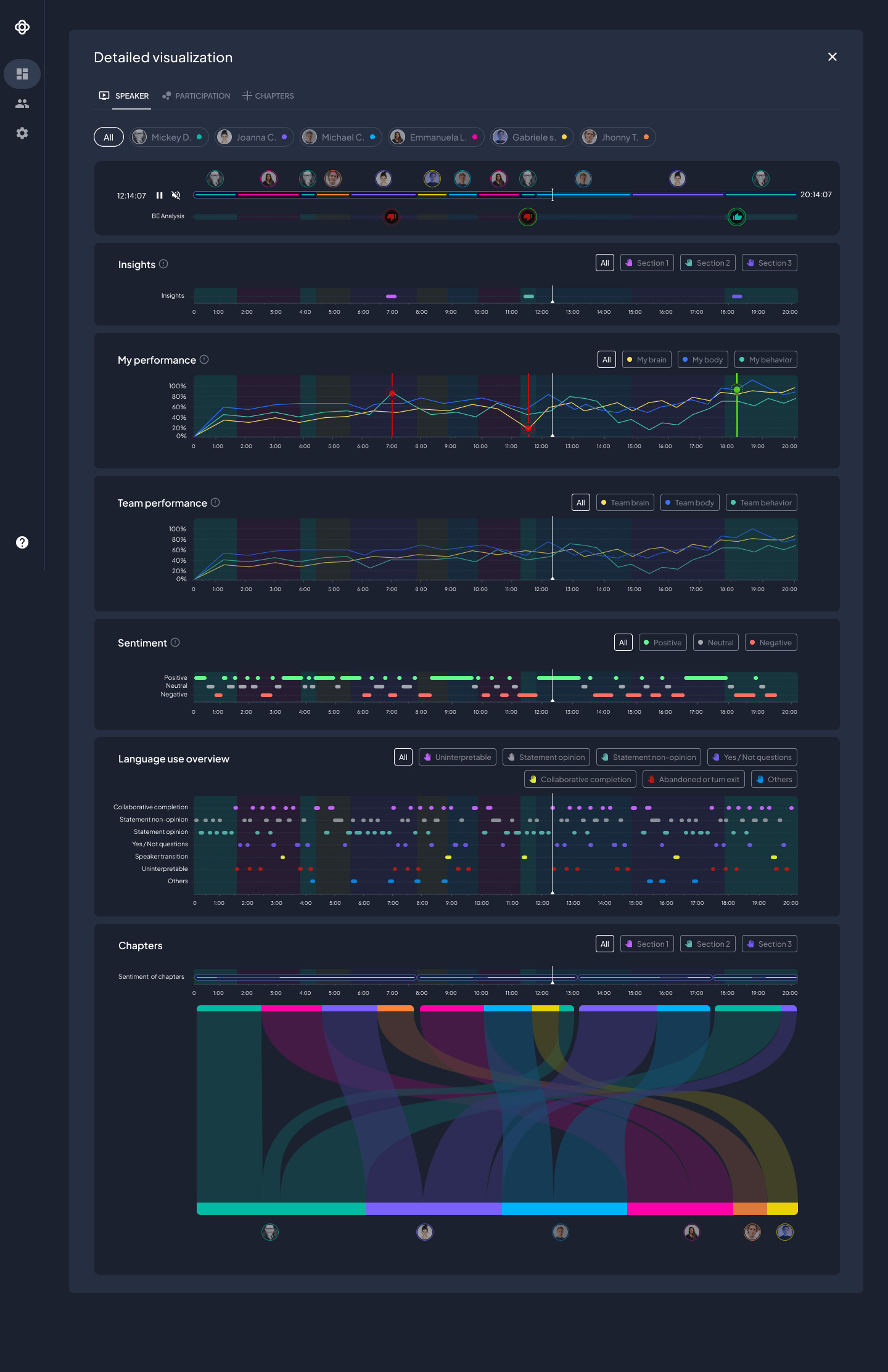
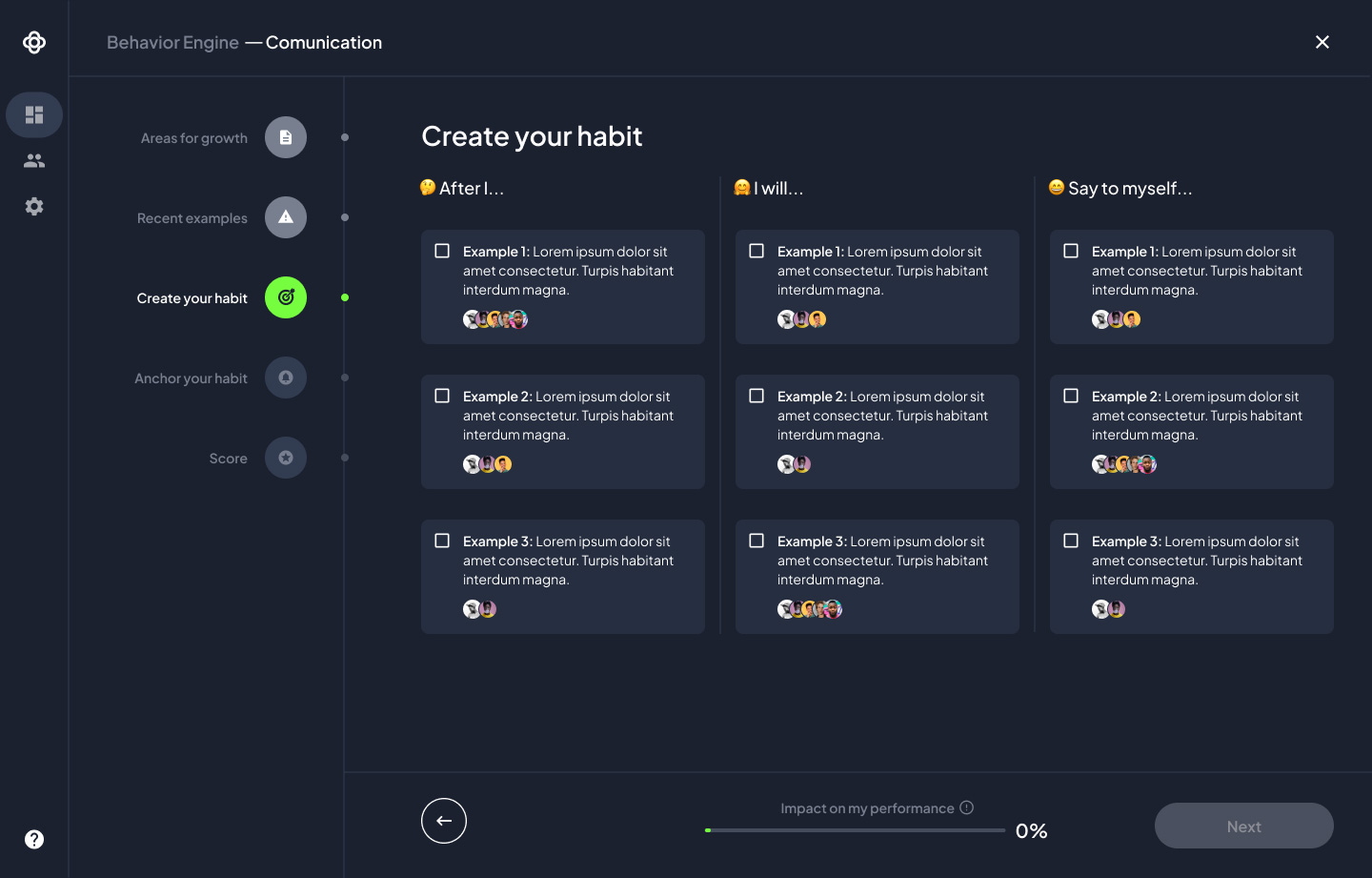
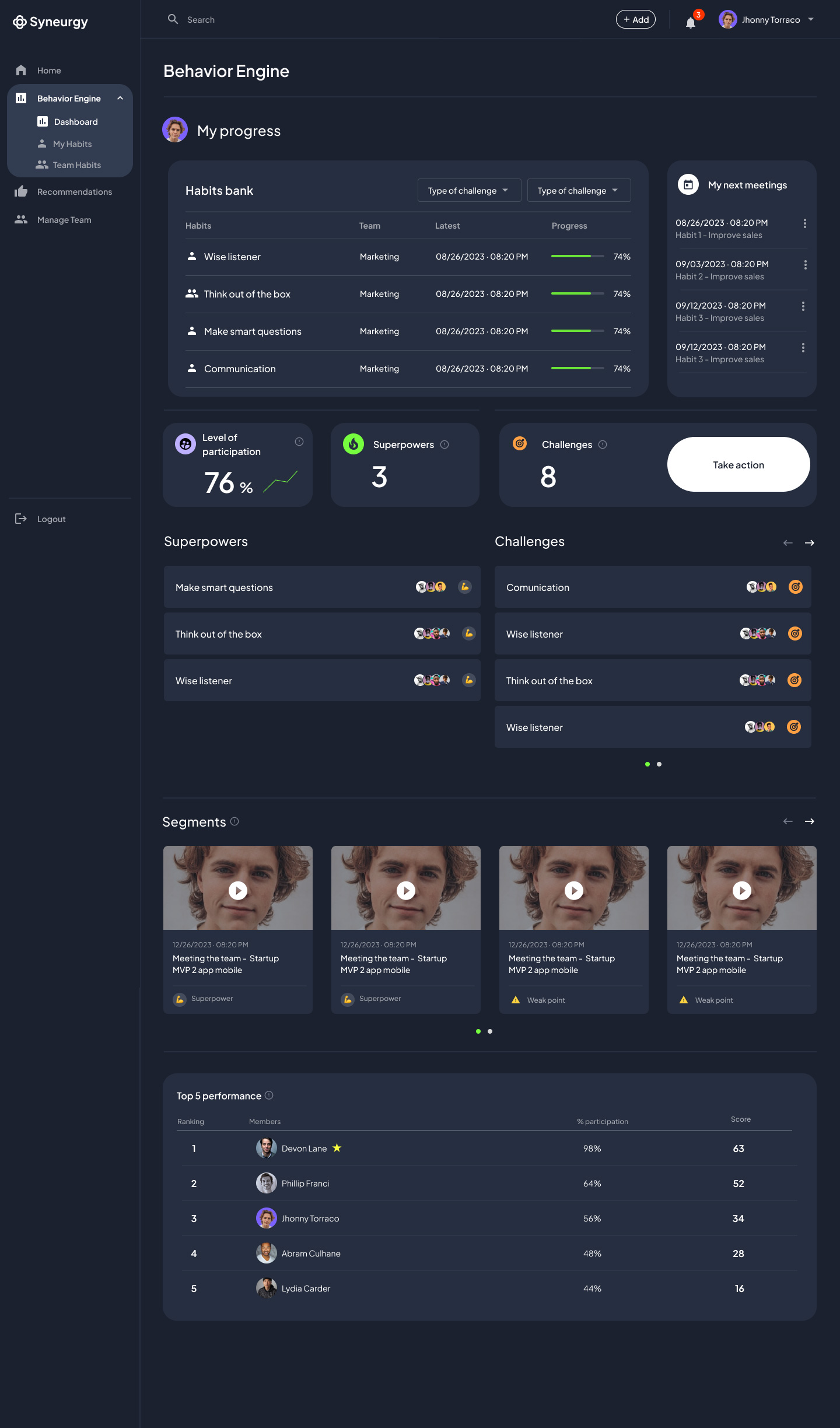
Deliverables: Synchrony Management Dashboard, Meeting Analysis View, AI-Informed Behavior Change Interface, Component Library
Product type: 0 → 1 MVP, B2B SaaS · AI · Neuroscience.
Problem:
Syneurgy had working AI and a validated data model, but no product layer. The existing interface was a scientific demo, inaccessible to the team leaders and managers it was built for. Complex neurobiological signals had no translation into something a non-specialist could act on.
Process:
Led design end-to-end with one UI designer and two engineers. To engage meaningfully with PhD-level stakeholders, I studied the underlying research papers, enabling high-level conversations about the science and proposals that balanced creative product thinking with business viability and user privacy. Coding literacy kept designs aligned with the dev framework from day one, cutting implementation back-and-forth.
Solution:
Three modules integrated from concept to high-fidelity: a Synchrony Management Dashboard, a Meeting Analysis view, and an AI-Driven Behavior Change interface. The Behavior Engine powering the latter was co-designed with David Ngo, the creator of Stanford’s first Behavior Design major. A shared component library unified the experience across all three modules, supporting remote, hybrid, and in-person contexts within a single coherent system.
Result:
Delivered an MVP that transformed a scientific demo into a product ready for real teams. Leaders can now identify coordination gaps, assign follow-ups, and track progress without a neuroscience background required.